



What you get here.
Eight areas that a project is assembled from. You rarely need all of them — but everything you do need comes from the same place and sits with the same people.



 AI training for your teamYour team learns to use AI itself — and doesn't depend on us afterwards.

 AI in operationWhere it measurably lowers effort — with clear limits where it has no business being.

 Advice and strategyBefore anything gets built, it has to be clear what is being built — and why.

 Web design and websitesThe first thing your customers see. Fast, readable, maintained.

 Web applications and SaaSSoftware that represents your workflow — from the first sellable version onward.

 Automation and interfacesThe manual work between your systems goes away.

 Support when you need itThe solution is yours. Support is there if you want it.

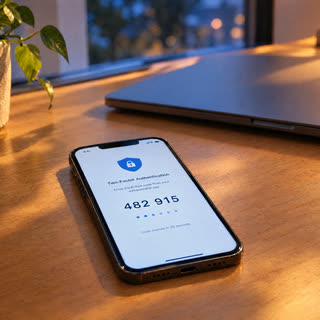 An eye on securityA second look at accounts, permissions and settings — especially in Microsoft 365.
What you are asking yourself
The questions we get.
We already use ChatGPT. What would training add?
Most people use it like a search engine: question in, answer out. That is a fine start, but only a small part of what is possible. Training is about the work behind it: handing over whole steps, building your own templates and tools, checking results properly — on the tasks your team has every day, not on examples.
Our team isn't technical. Does that matter?
No. Nobody has to program. We start from what your people do every day — writing quotes, answering enquiries, moving data from one system to another — and go only as far as makes sense for your business. Whoever wants to go deeper can. Whoever does not, need not.
Will AI take our people's work away?
It takes work off them, mostly the kind nobody is glad of anyway: retyping, searching, entering things twice. The people who know your business remain what matters most. That is why we train the team itself rather than introducing something around it — whoever holds the tools experiences them as relief, not as a threat.
May we put customer or patient data into AI tools?
Not just like that, and that belongs in every training. We show which tools and settings suit which data, what stays out and where a person signs off. The legal assessment, for patient data for instance, belongs with your data protection specialist — we tell you early when you need one.
ChatGPT, Copilot or something else — which should we use?
That depends on what you already work with and which data is involved. If you are on Microsoft 365 anyway, Copilot is often the obvious choice; for other work another tool fits better. We are not tied to any vendor and recommend what suits you. And your team learns in a way that lets it switch later.
Our data has grown over the years. Is that an obstacle?
That is the normal case. Some of it lives in people's heads, some in spreadsheets, some in several systems at once. But AI is only as good as the data underneath. So where it is needed, we first bring it into one place and check it. That is not a detour; it is the start.
And if everyone goes back to the old way afterwards?
That happens when people practise on examples that have nothing to do with their day. So we work on your real tasks, and what comes out of it — templates, workflows, small tools — stays documented with you. Whoever gets stuck later gets support, if you want it.
Aren't we making ourselves dependent on you?
The opposite is the point. What we show and build belongs to you: documented and handed over, with no hardware or services only we understand. Your team develops it further itself. A dependency we built in would not be a service, it would be a sales trick.
What does it cost?
We set that for each business individually. Every training is made to measure, built around your team and your workflows — so there is no off-the-peg price. After a first conversation you receive a quote that contains exactly what you need. If you want to carry on with us afterwards, you can add person-days through a service contract.
Let's talk about it.
Tell us where it snags. You will hear from us whether we are the right people for it — and if we are not, we will say so just as plainly.
Request a conversation